Our Research
Lackawanna Avian Research Center (L.A.R.C.) studies the small birds that pass through northeastern Pennsylvania each year and shares what we learn with the community. Our findings have been published in several peer-reviewed scientific journals and presented at several venues. Go here to read about our research in more detail.
Twenty-Three Years of Watching Migration
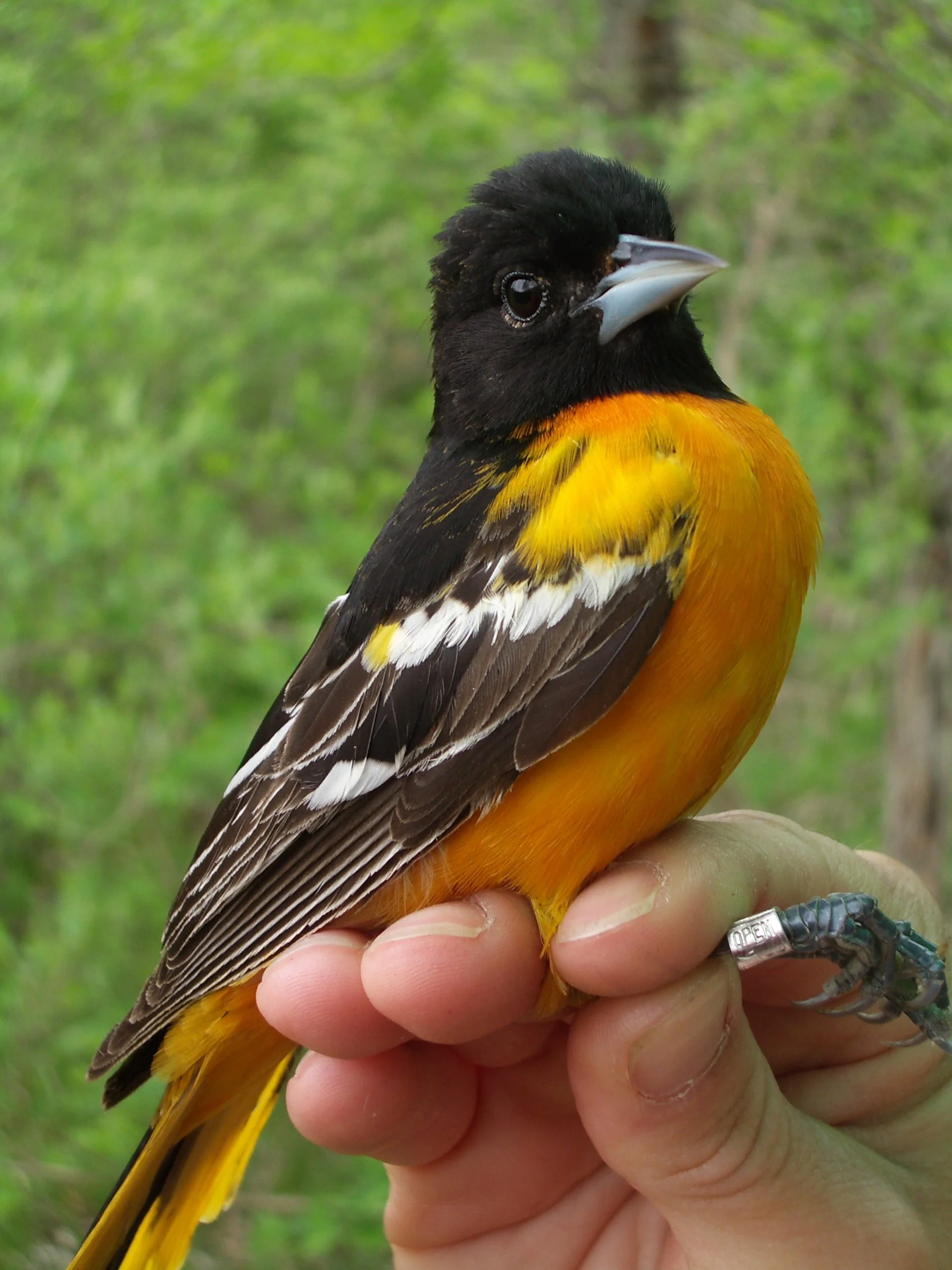
Every spring and fall, songbirds travel through our region on journeys of hundreds or even thousands of miles. For more than two decades, we have safely caught migrating birds at our field site near Lackawanna State Park. Each bird is gently banded and measured, then released within minutes. Twenty-three years of these observations make one of the longest records of migrating songbirds in the area.
Are Our Shrublands Good Habitat for Migrants?
Our field site is a shrubland dominated by non-native bush honeysuckles and European buckthorn, a common habitat across the Northeast. These thickets look inviting, with dense cover and plenty of berries.
To judge habitat quality, we weigh birds. Fat is the fuel for migration, and measuring it directly in a live bird takes expensive instruments that are rarely practical in the field. Weighing a bird is simple, fast, and inexpensive, and it minimizes stress on the bird, so we and other researchers use body mass as a measure of fat gain or loss. A good stopover site lets birds gain mass quickly and move on in good condition.
In several published studies, we found that birds using these shrublands have a reduced ability to gain mass, and sometimes cannot gain mass at all. Honeysuckle and buckthorn berries are generally lower in fat than many native fruits, and non-native plants usually support fewer of the insects that songbirds eat.
Not every bird is affected equally. Age and sex matter, and so does a bird's journey: weather on the wintering grounds or along the migration route can carry over and influence how well a bird recovers when it reaches us.
Is the Air Affecting the Birds?
By combining our bird records with satellite data on air pollution, we are asking whether birds arrive lighter, or are less active, when the air is dirtier. Early results vary by species. Some, like the Traill's flycatcher, appear to weigh less and be less active when fine-particle pollution is high. To measure what birds actually breathe, we are building a solar-powered air-quality monitor for the site.
Northern Saw-whet Owls
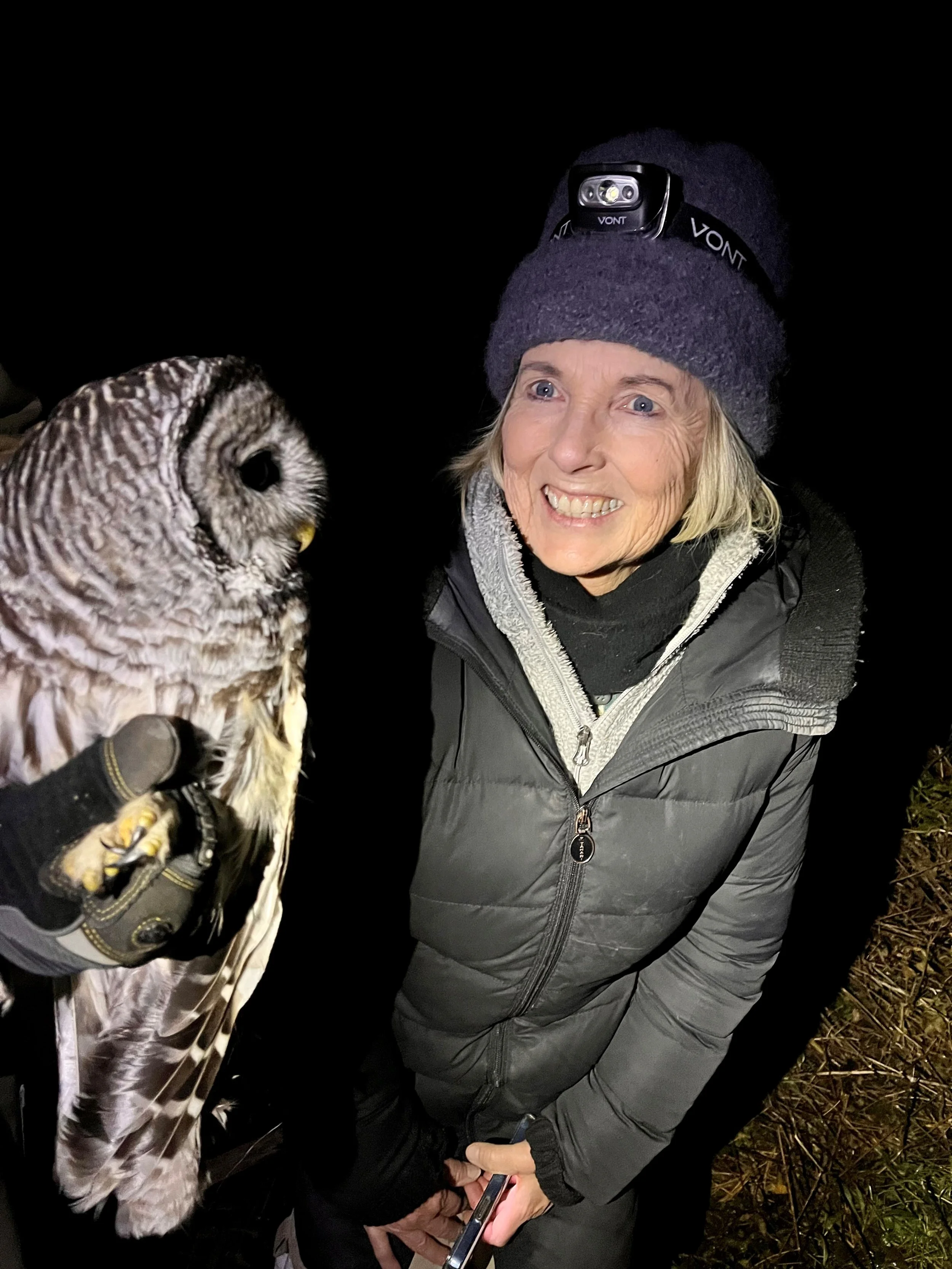
In autumn, we also study Northern Saw-whet Owls, tiny owls that migrate through at night. We are investigating how their breeding success may depend on vole and mouse cycles in forests far to the north, and why the color of their eyes varies so much from bird to bird.
Why It Matters
Birds are early warning systems. When their weight, numbers, or health change, something in their environment has usually changed too. Long-term research like ours shows which habitats truly help birds, and it can guide decisions about restoring native plants for the birds that depend on them.
Join Us
L.A.R.C. is a small, community-powered organization. Your support helps us keep banding, build our air-quality monitor, and share this work with students, families, and neighbors. [Donate] · [Learn more about our research]